
Short answer: to get a comparable brake shoe assembly quotation, send each supplier the same identification data, dimensional drawing or verified sample, lining specification, included-hardware list, quality-document requirement, annual volume and packaging standard. The phrase brake shoe assembly is not precise enough by itself: it may mean a shoe set, shoes mounted on a spider, a parking-brake set or a complete loaded backing plate.
This checklist is for distributors, importers and catalog teams screening a brake shoe assembly supplier. It separates part identification from supplier qualification so price is not compared before the product scope is confirmed.
1. Define exactly what the supplier must quote
| Required RFQ field | What to send | Why it matters |
|---|---|---|
| Reference number | OE, aftermarket or customer drawing number, including suffix | Prevents matching only by appearance. |
| Application | Vehicle or axle maker, model, year range, market and installation position | Separates similar-looking variants. |
| Assembly scope | Shoe set, shoe-and-spider assembly, parking-brake set or loaded backing plate | Ensures every quote contains the same components. |
| Dimensions | Drum diameter, shoe width, anchor/pivot dimensions, hole locations and mounting pattern | Confirms the physical envelope and interfaces. |
| Lining | Material/specification reference, dimensions, attachment method and any required test standard | Prevents price comparisons between different friction specifications. |
| Hardware | Itemized springs, pins, retainers, rollers and adjusters included or excluded | Defines the delivered bill of materials. |
| Commercial data | Trial quantity, annual forecast, destination, Incoterm and packaging/label format | Allows a usable MOQ, lead-time and freight basis. |
2. Do not use “brake shoe assembly” as the complete specification
Suppliers and buyers may use the same term for different products. State whether the quotation is for loose lined shoes, shoes with a mounting spider and hardware, or a complete backing-plate assembly. Ask the supplier to return an itemized scope with the quotation.
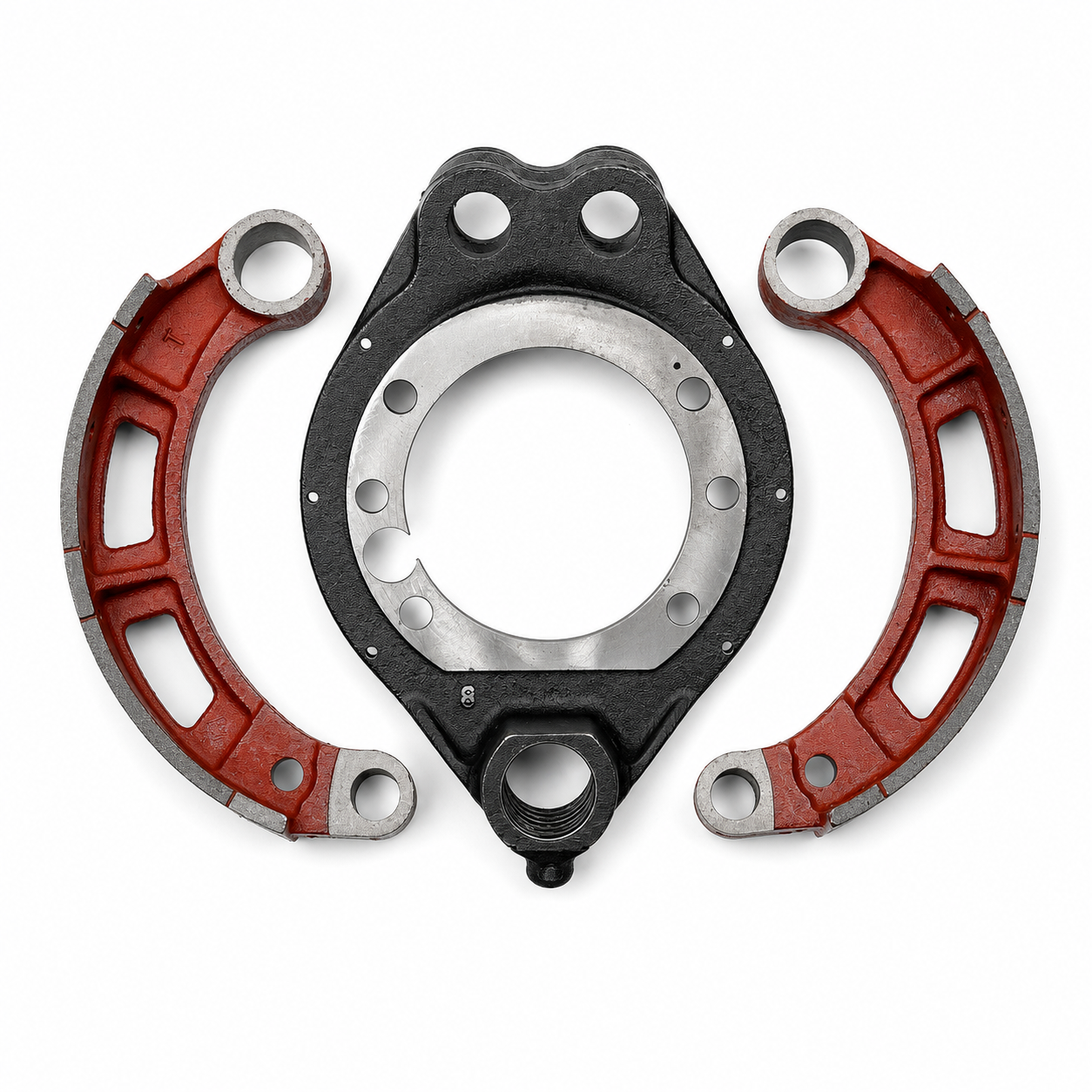
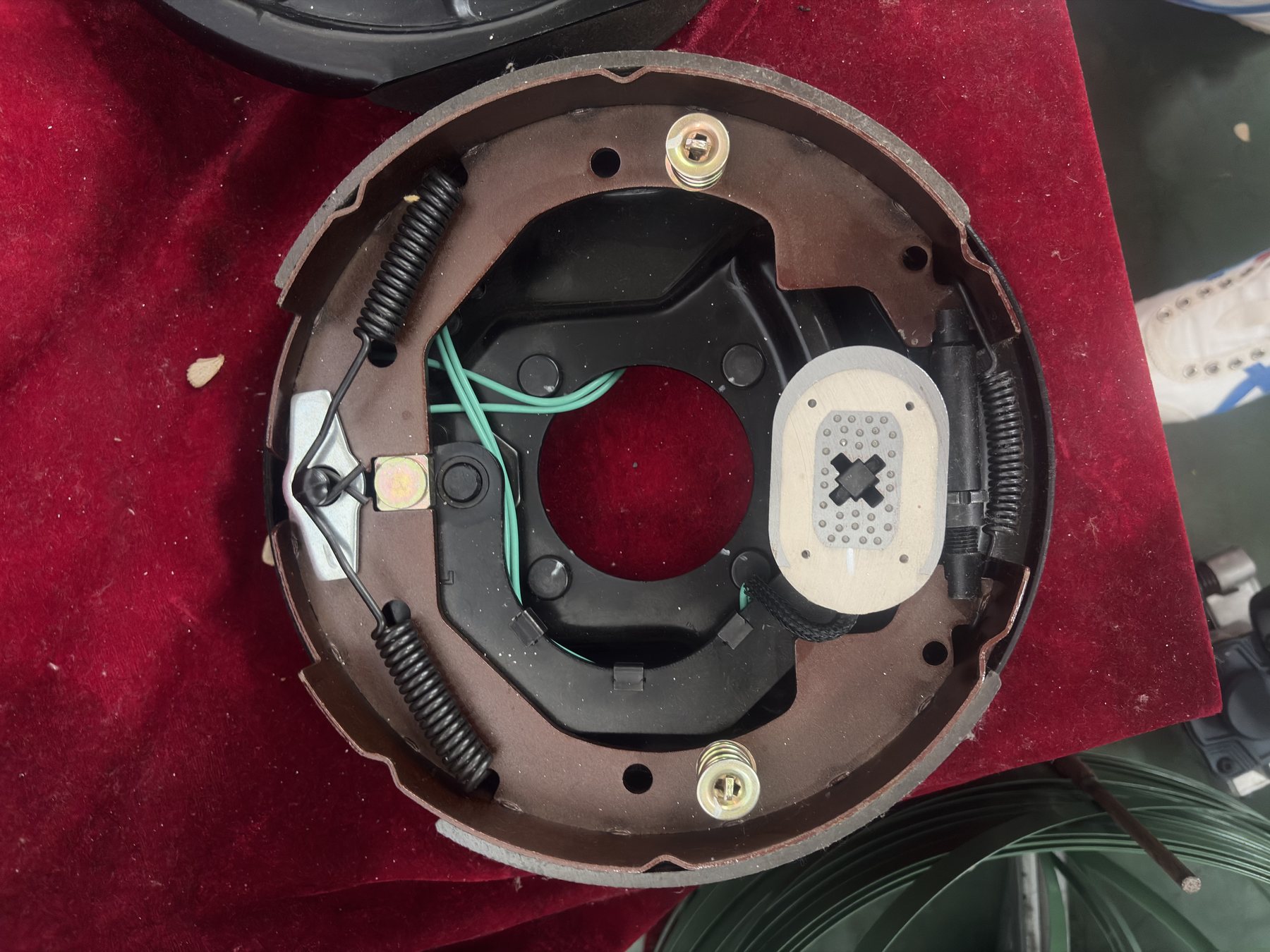
3. Send an identification photo set
- Full front view photographed square to the assembly.
- Full rear or mounting-side view.
- Side profile showing shoe width and lining thickness.
- Close-up of every stamped, cast or printed number.
- Close-ups of anchor points, adjuster, springs and mounting holes.
- Measurement photos with the measuring tool and reference points visible.
Do not crop out the mounting interface, rotate or mirror an image without noting it, or rely on a marketplace thumbnail as the only identification evidence.
4. Define the lining and hardware requirements
Provide the drawing or approved reference for lining length, width and thickness; attachment method; and any friction or regulatory specification required by the destination market. If the existing part is the only reference, state that the sample is for identification and that production specifications still require approval.
List the hardware line by line. A supplier should not have to guess whether return springs, hold-down parts, anchor pins, rollers, adjusters or parking-brake components belong in the price.
5. Ask for evidence, not a generic “high quality” promise
The appropriate evidence depends on the part and market. Request only documents relevant to your program, then verify that the part number, revision and test conditions match the quoted product.
- Dimension or inspection report for the approved sample.
- Material or lining specification referenced to the quoted part.
- Applicable test report and acceptance criteria, when required.
- Lot identification and traceability method.
- Packaging specification and label proof.
- Change-control process for material, tooling or sub-supplier changes.
6. Qualify the supplier before placing a production order
| Supplier question | Acceptable evidence | Warning sign |
|---|---|---|
| How will the part be identified? | Cross-reference, drawing review and sample/dimension confirmation | Quotation based only on one photo. |
| What exactly is included? | Itemized component scope or bill of materials | “Complete set” without a component list. |
| How is the sample approved? | Defined measurements, inspection results and signed approval record | Production starts before approval criteria are agreed. |
| How are changes controlled? | Written notification and buyer approval requirement | Material or hardware substitutions without notice. |
| How is packaging verified? | Approved label/artwork proof and packing specification | Packaging discussed only after production. |
7. Use a sample-first approval sequence
- Supplier confirms whether the reference can be matched and lists missing data.
- Buyer and supplier freeze the drawing, component scope and packaging requirement.
- Supplier prepares the sample and inspection evidence.
- Buyer performs dimensional, fitment and any required application testing.
- Both parties record the approved sample/revision before the production order.
A photograph or visual comparison alone is not final fitment approval. Safety-critical brake components must be validated against the buyer’s application and applicable requirements.
What should be included in a brake shoe assembly RFQ?
Include the reference number, application, assembly scope, drawing or verified sample, critical dimensions, lining and hardware requirements, quality-document list, order forecast, destination, Incoterm and packaging format. Meklov can review these details for distributor and private-label brake shoe assembly programs.
Send a brake shoe assembly RFQ
Need help matching a brake part?
Send product photos, model references, quantity, destination market and packaging requirements. Meklov can review the RFQ scope before quotation.